


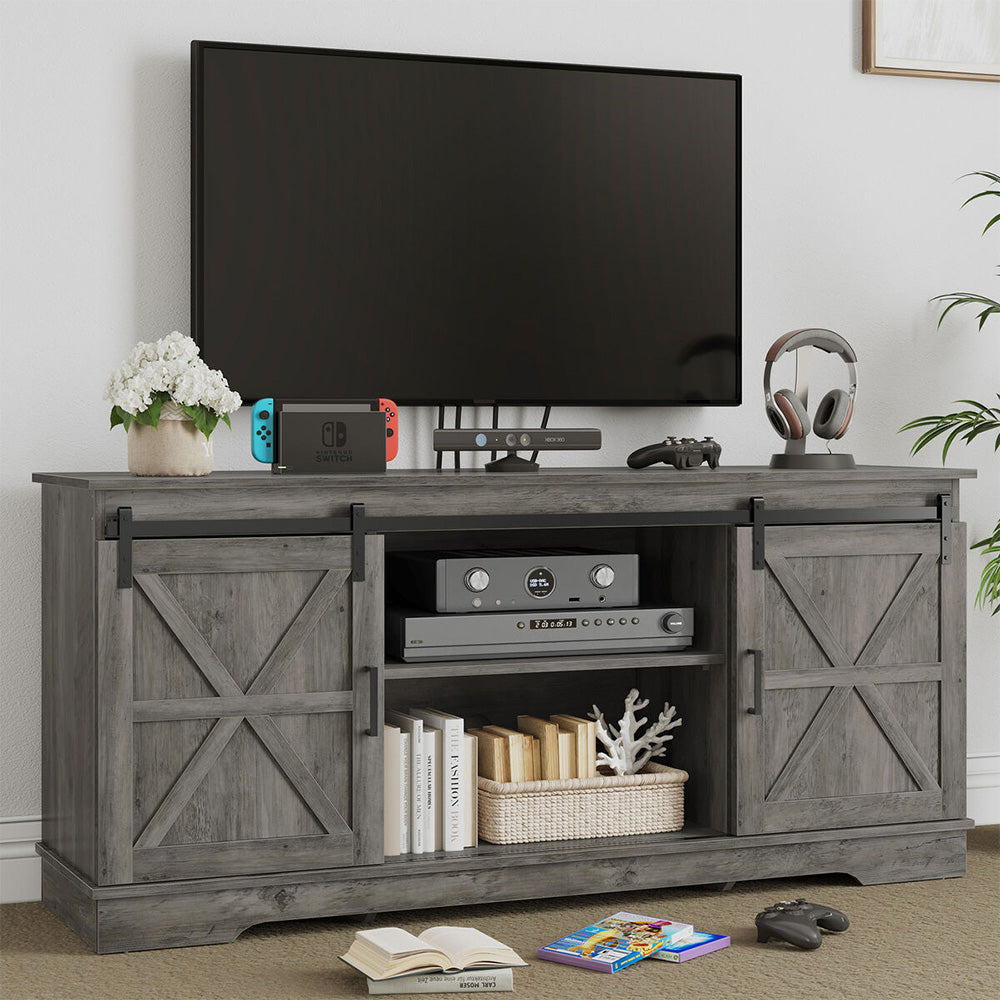
So what can you use instead of a TV stand? You have more options than you might think. A sideboard, credenza, console table, dresser, bookcase, floating shelf, bench, chest, or even a TV easel can all work as a TV stand alternative, each one offering a different mix of storage, style, and footprint.
When choosing what to use instead of a TV stand, start with the basics: the piece should be wide enough for the TV base, deep enough to keep the screen stable, and strong enough to hold the TV plus any devices you plan to place on it. If the TV is wall-mounted, the furniture below can focus more on storage, cable control, or filling the empty space under the screen.
Some of these options may already be in your home, while others can make the TV area feel lighter than traditional TV cabinets. Below, we break down 9 practical alternatives and what to check before using each one.
Ideas for Creative TV Stands
Nowadays, people pay more and more attention to how to better utilize home space and design for personalization. An increasing number of people want creative and practical ways to decorate the living room furniture, which can save space and make them feel comfortable with a style that suits their taste. Later, we will try to introduce several interesting alternatives to TV stands that can not only keep in style but also help one control one's budget.
Whether you're looking for entertainment center alternatives, need something to stand your TV on in a small apartment, or just want a piece of furniture that does more than hold a screen, there's an option here for you. We've organized these from wall-mounted solutions to freestanding furniture, so you can jump to whatever fits your setup.
Floating Shelf
The floating shelf is more elegant when compared to the old, bulky TV stand. First, the TV is fixed on the wall, and the floating shelf frees more space on the floor in the area that the TV has occupied, thus making the room appear much more spacious.

Yet, one should bear in mind that the stability of the shelf is crucial. After all, it is supposed to carry the weight of electronic equipment and other things, so safety should come first.
Another good side of installing the floating shelf is that wires and other messy things could be easily hidden behind the shelf without spoiling the general feeling of tidiness.
Bookcase
A bookcase is very handy to use as a TV stand. While it allows setting the TV on, it also allows the accommodation of books, decorations, and electronic stuff like game consoles, which keeps the room in order and spacious, adding up to a visual layering effect.

For small apartments, a shorter bookcase would be good because it can store a lot of stuff, and a TV stand can also fit. With a reasonable layout, full use can be made of the storage of a bookcase along with displaying your style for decoration, which is flexible and convenient.
Console Table
The console table is a good substitute for the TV Cabinet because it snugly fits against the wall with little space occupied. Still, there is enough storage. You may pick models with drawers or shelves for small things such as remote controls, chargers, and headsets.

What's more, the space under the table can be used flexibly, and you can put storage baskets, footrests, and even some decorations. Unlike those heavy traditional TV cabinets, console tables can almost be moved easily, giving you more possibilities to arrange your space.
TV Easel
The TV Easel is a brand-new design that breaks all the shackles of traditional TV stands. Its biggest highlight comes in turning the TV from an ordinary source of amusement to a beauty in the living room, much like a work of art on an easel. Every home can be turned into a small art gallery with the savior of the TV Easel being the thing on display-unique and full of character.

The flexibility of the TV easel is also appealing. You can adjust its height and angle freely according to your preference, and many are also equipped with wheels; this means that the layout of the living room is not fixed anymore. Maybe someday you want to watch TV someplace else or just adjust the light, the easel could easily fulfill this demand. The design not only makes the room more flexible but adds a little surprise and delight to everyday life.
Dresser
A dresser can work as a TV stand when its top is wide and deep enough for the TV base and its published load rating supports the TV and any equipment placed on it. The drawers can also keep remotes, controllers, game consoles, and other accessories organized and out of sight.

Dresser heights vary, so check where the screen will sit relative to your normal seated eye level before using one as a TV stand. If the height and support dimensions work for your setup, the remaining surface can still be used for small decor without crowding the TV base.
Chest
A low, wide chest can work as a TV stand when the TV base fits fully on the top and the chest’s published load rating supports the TV and any equipment placed on it. Its enclosed storage can also keep media accessories, remotes, and other items out of sight, helping the TV area stay organized.

Chest heights vary, so do not assume a taller piece will automatically provide a better viewing position. Check the final screen height against your normal seated eye level, along with the top depth and TV base footprint, before using a chest as a TV stand.
Bench
A bench TV stand is an affordable, flexible option that might sound unusual but comes with several practical benefits. The armless and backless construction can provide the feeling of being on a standard TV stand but usually for cheaper.

Also, you can use an upholstered bench if you want to add a bit more comfort. It will be a comfortable seat to sit down and rest sometimes, or with your family and friends to chat more in a relaxed position.
Of course, when choosing a bench, pay great attention to the fact that it is structurally strong enough to bear the weight of the TV. Also, try to pay great attention to choosing the proper height in order not to affect the viewing experience.
Credenza
The credenza stands out as a handy substitute for a TV stand. Its low, spacious design can work well for many living room setups, especially when you need closed storage for cable boxes, game consoles, Blu-ray players, and more. Before using one under a TV, check the width, depth, and weight capacity against your screen and devices.
Besides, a credenza often sits at a comfortable viewing height without taking up as much visual space as a larger cabinet.

A fancy TV stand is often called a credenza, sideboard, or media console. A credenza is usually lower and longer, while a sideboard is often slightly taller and useful when you want closed storage near the TV. For a closer comparison, see this guide to sideboard vs credenza.
Sideboard
A sideboard can be a practical TV stand alternative when you want a wide surface combined with closed storage. Cabinets and drawers can keep remotes, media devices, books, and other living-room items organized while reducing visible clutter around the TV.
Because sideboards vary in height, width, depth, and load capacity, check the specific piece against your TV before using it as a stand. The TV base should fit fully on the usable top surface, and the final screen height should work with your normal seated viewing position.

Stylish and Versatile
The simple lines, clear wood grain finish, and exquisite door design ensure the Belleze sideboards will be among the last things one sees before making a turn. From a TV cabinet to an office filing cabinet, and even a bedroom storage cabinet, it has combined the items of beauty and practicality in one. This Belleze sideboard can also be used as a TV cabinet for placing a TV, displaying art, storing tableware and sundries, or even integrating into the room for artistic decoration.
Artistic Expression
These sideboards are designed artistically, so they can be placed in one's room as a single work of art. Furthermore, the broad counter area of the sideboard can display sculptures, glass bottles, candlesticks, and other artworks. You can also create an exhibition space on the upper wall to display your expression of art perfectly.
Check the Sideboard Against Your TV
Do not choose a sideboard by screen size alone. Check the TV’s actual base or leg spacing, installed weight, and required depth against the sideboard’s usable top dimensions and published load rating. For a wall-mounted TV, the sideboard can instead be chosen mainly for storage, proportion, and cable management.
Conclusion
To recap: for storage, a sideboard, credenza, or dresser works best. For small spaces, a floating shelf or wall-mounted setup keeps things minimal. If you want flexibility, a console table, bench, or TV easel is easy to move. And if you prefer something that doesn’t look like a TV stand at all, a bookcase or chest blends into the room. The right choice depends on your space and how you use it.
If these alternatives still do not give you enough room for media devices, speakers, or cable management, compare TV stands or modular entertainment centers next. That path is more practical when the TV area needs dedicated storage and cord control, not just a surface to hold the screen.
Traditional TV stands still have their place, but they are not the only way to furnish a living room. The right alternative should support how you use the space, whether that means adding storage, opening up floor area, or making the TV zone feel less visually heavy.
FAQs
Can a Console Table Be Used as a TV Stand?
Yes. A console table works well, especially with a wall-mounted TV. Check the depth first — most are 12–16 inches deep, enough for media devices but tight for larger components. If the TV sits on the table, make sure the surface is wide and deep enough to support the base securely.
What Is a Fancy TV Stand Called?
Upscale TV stand alternatives are often called a credenza, sideboard, or media console. A credenza is low and long, a sideboard is slightly taller, and a media console is designed specifically for TVs and AV equipment.
Do You Even Need a TV Stand?
No. If the TV is wall-mounted, you can skip the stand. You’ll need cable management and may still want a small shelf or narrow console for devices.
What Can I Use as a Cheap TV Stand?
A sturdy bench, low bookcase, dresser, or wide coffee table can work. The key is proper height, strong structure, and enough width to support the TV base with a few inches of clearance.
What Is the Difference Between a Sideboard and a Credenza?
A credenza is lower and longer, sitting closer to the floor. A sideboard is slightly taller and often raised on legs. Both work as TV stand alternatives, but a sideboard places the TV a bit higher.
Related Reading


Leave a comment
This site is protected by hCaptcha and the hCaptcha Privacy Policy and Terms of Service apply.