


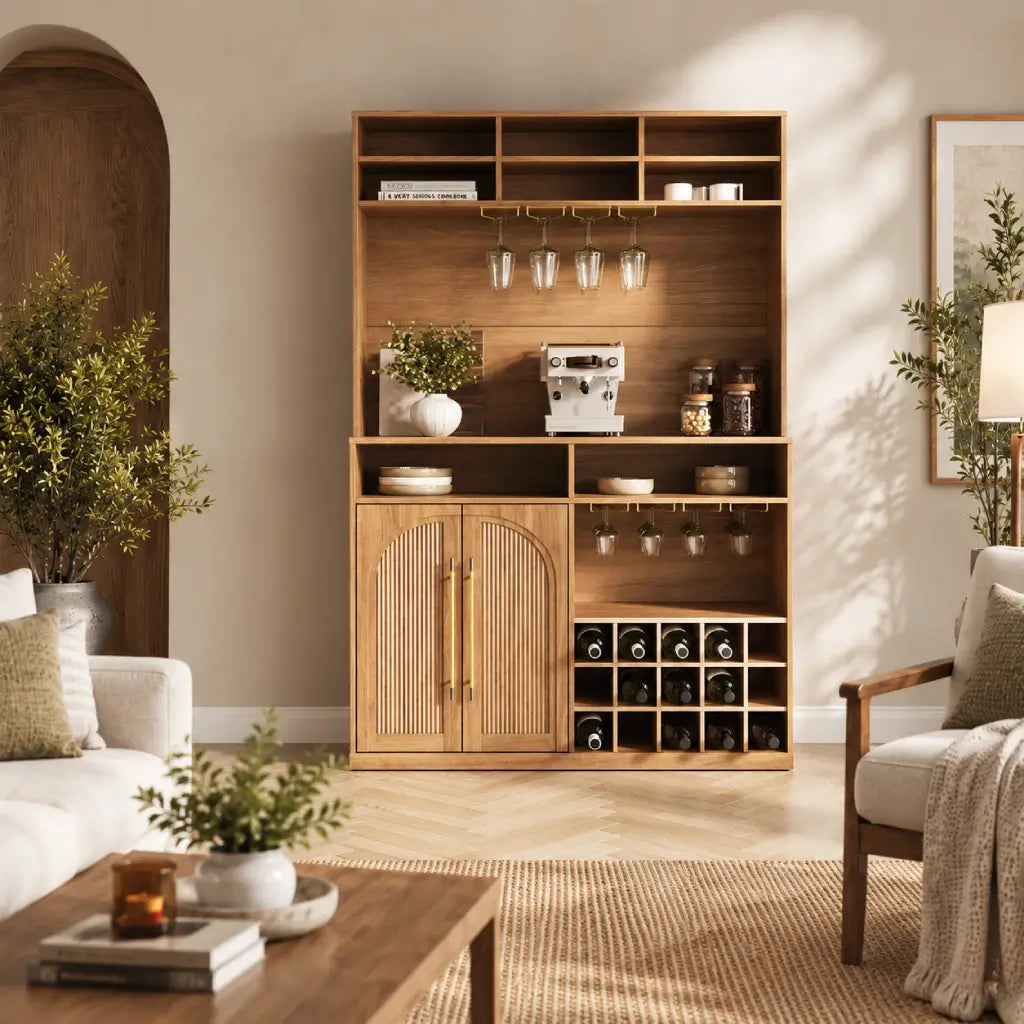
Adding a bar cabinet transforms your living room into an inviting lounge for weeknight relaxation and weekend hosting. The right setup depends on how you use it. If you enjoy pouring drinks for guests, an open serving counter is essential. If you simply want your collection organized, tall vertical storage keeps bottles tidy on a compact footprint.
In tighter rooms, tucking a cabinet into an unused corner or beside a sofa preserves floor space while keeping walkways open. Starting with your room layout and daily foot traffic ensures the piece feels like an intentional design choice rather than an extra box squeezed in as an afterthought.
Do You Need a Mixing Surface or Bottle Storage?
If your idea of a home bar centers on entertaining, countertop space should guide your choice. Shaking cocktails, uncorking wine, and setting out glassware requires room to work. A narrow, closed cabinet forces you to carry bottles back and forth to the kitchen. A lower, wider credenza gives you a dedicated waist-height surface right where people gather.
If your main goal is organizing bottles and stemware out of sight, vertical storage is the smarter route. Tall cabinets take advantage of ceiling height instead of claiming precious floor area. You get safe hanging racks for delicate wine glasses and deep shelves for liquor bottles, all contained within a compact footprint that leaves walkways clear.
Consider your collection size and how much you expect it to grow. A compact cabinet easily holds a dozen standard bottles, but serious collectors with oversized spirits, decanters, and specialty glassware need deep, tall shelving. Taking an honest inventory of what you actually own ensures you choose a layout that accommodates your collection comfortably.
Where to Put a Bar Cabinet in Your Living Room
The ideal spot for a bar cabinet balances social convenience with effortless room flow. It should sit close enough to seating that grabbing a drink feels natural, yet far enough from primary doorways that nobody has to dodge open doors or squeeze past.
Along an Open Wall or in a Corner
A straight wall lets you create a striking focal point in your living room. A low credenza or tall hutch centered on a blank wall provides a dedicated entertaining zone where you can hang framed art or a decorative mirror above to anchor the vignette.
An empty corner is one of the coziest, most efficient ways to fit a bar into a room with limited wall space. A dedicated corner bar cabinet turns an awkward architectural dead zone into an inviting drink station, drawing the eye toward the room perimeter.
Corner cabinets still require adequate operating space to be practical. Make sure the cabinet sits far enough from window casings and doorway trim so that both cabinet doors can swing past ninety degrees, allowing easy access to bottles tucked in the back.

Beside Your Couch or Near the TV Wall
Placing a low bar cabinet beside your sofa turns it into a luxurious lounge bar within arm's reach. It can double as an extended side table for holding a small table lamp or cocktail coasters, creating an intimate hospitality zone directly inside your conversation area.
Pay attention to height relationships when pairing a cabinet with living room seating. A cabinet placed next to a sofa arm looks most cohesive when its top sits slightly lower or clearly higher than the armrest, avoiding an awkward, mismatched alignment that looks like a design mistake.
If you place a bar cabinet along the media wall, use it to balance visual weight across the room. Choose a cabinet with a different height or complementary wood finish from your media console, adding warm furniture texture and keeping the long wall from looking flat and monotonous.
Between the Living Room and Dining Area
In open-concept layouts, placing a bar cabinet between living and dining spaces creates an attractive transition zone. It serves as a natural entertaining hub during parties, welcoming guests with drinks without drawing extra foot traffic into the kitchen while meals are being prepared.
Because furniture in open-concept spaces is visible from multiple angles, prioritize a cabinet with finished sides and clean panel profiles. A well-crafted piece looks intentional whether you are relaxing on the couch or seated at the dining table, acting as a graceful room divider.
Keep a comfortable clearance corridor on both sides of the cabinet. Guests pausing to inspect glassware or pour a drink should have plenty of elbow room without obstructing the natural walking route between the dining area and the living room.
Tall Cabinet or Low Sideboard: Which Fits Better?
Deciding between a vertical hutch and a horizontal sideboard comes down to your wall dimensions and how you plan to serve. Tall cabinets maximize storage on a narrow footprint, while lower credenzas provide an expansive tabletop for setting out drink trays, garnishes, and glassware.
| Your Room Situation | Recommended Format | Why It Works |
| Narrow wall, large bottle collection | Tall bar cabinet with hutch | Stores bottles and glassware upward without eating into floor space |
| Long open wall, frequent hosting | Low credenza or sideboard | Provides an open countertop for pouring drinks and staging trays |
| Multi-use room with shifting furniture | Modular low sideboards | Lets you pair units together or split them across different walls |
| Small room or unused corner | Corner bar cabinet | Fits into dead corner space while keeping main walkways clear |
Tall Bar Cabinets for Vertical Bottle Storage
Shoppers with ample wall height who want an all-in-one beverage center can look to the Jagger 72" tall bar cabinet with hutch as a benchmark. Measuring 47.6 inches wide, 15.8 inches deep, and 72.1 inches high, it packs eight stemware racks, wine cubbies, adjustable shelves, and fluted lower doors into four feet of wall width.
This vertical layout shines in storage-first living rooms where wall width is limited. It draws the eye upward, giving your collection a distinguished architectural presence while keeping the floor open. Choose this format if your goal is housing glassware, liquor, and bar accessories in one unified footprint.
If the Jagger cabinet is currently out of stock, use the Notify Me button on the listing for restock alerts. Shoppers comparing alternative formats ready to ship can explore similar tall and corner designs in the Belleze bar cabinets collection.
Low Sideboards for Pouring and Serving Drinks
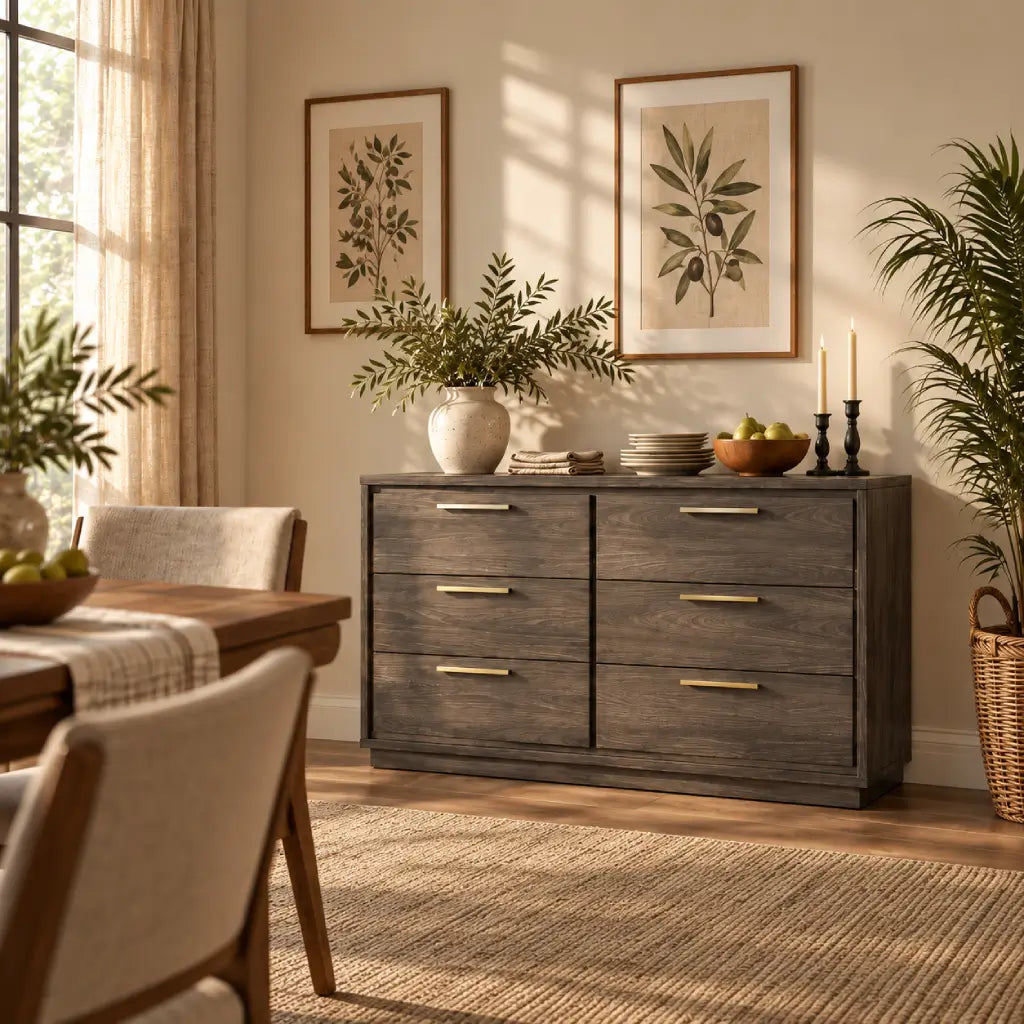
If your vision of cocktail hour includes mixing drinks, setting out charcuterie, and casual conversation, a low credenza is the ideal foundation. It keeps storage below eye level so your living room retains an open, airy feeling while providing a durable tabletop for entertaining.
Longer walls often benefit from versatile modular storage. The living room modular sideboards collection features low credenzas that function as broad serving buffets, giving you the freedom to position units side-by-side or separate them across different walls as your layout evolves.
Transforming a credenza into an organized bar station involves arranging trays, bar tools, and moisture-resistant mats. Belleze outlines the complete workflow for organizing supplies, placing decorative trays, and surface care in how to use a sideboard as a home bar or coffee station.

Closed Doors or Glass: What Should Stay Visible?
A living room liquor cabinet with solid or fluted doors is the most forgiving option for daily living. Home bars naturally accumulate mismatched bottle shapes, bright commercial labels, strainers, and spare napkins. Opaque wooden doors conceal this visual clutter, allowing the cabinet to blend serenely into your room decor when cocktail hour ends.
A glass-front bar cabinet is the stylish choice when your crystal glassware and specialty spirits are part of the decor. Clear or fluted glass doors protect delicate tumblers and wine glasses from ambient dust while catching soft room lighting, transforming your curated collection into a sophisticated visual display.
Mixed storage offers the ideal balance for most households. Open upper shelving or glass display areas showcase your favorite decanters and sparkling glassware, while closed lower cabinets hide backup bottles, cocktail shakers, and everyday tools. This split keeps your bar practical without overwhelming the rest of the living room.
How to Test the Fit Before You Order
Tape the Footprint and Check Door Swings
Blue painter tape is your best tool for previewing how a cabinet will fit your floor plan. Outline the cabinet width and depth against your baseboard, then tape the full arc of the open doors. Walk your daily paths between seating and doorways to ensure open doors leave comfortable clearance.
Always verify interior shelf heights against your tallest liquor bottles. Exterior cabinet dimensions include base legs, decorative crowns, and frame joinery, which can reduce usable interior height by three to four inches. Checking published shelf spacing confirms that your favorite tall bottles will stand straight rather than tilted.
Watch Out for Vents, Outlets, and Wall Studs
Inspect the wall surface behind your taped layout before ordering. Baseboard moldings, heating vents, and electrical outlets can prevent a cabinet from resting flush. Measure from the front face of your baseboard rather than the bare wall so you know the exact depth the cabinet will project into the room.
Securing tall storage furniture to wall studs ensures stability and peace of mind, especially in active households with pets or children. Always follow the manufacturer anchoring instructions provided with your piece. If you need to keep liquor secure, consider a lockable cabinet or discreet childproof latches.
Planning for tight hallways, stair turns, and floor leveling is straightforward with the Belleze modular sideboard measuring checklist, which covers the essential pre-delivery measuring steps.
Pick Your Finish After the Layout Works
Once your layout and dimensions are locked in, styling the exterior is where your personal aesthetic shines. Choosing the right finish ensures your new bar cabinet looks like an organic part of the living room rather than an isolated piece of storage.
Look at the dominant textures already in your space: your coffee table wood grain, media console finishes, and lighting metals. You can match existing tones for a cohesive, built-in appearance, or introduce a rich fluted oak or matte black accent to make the bar cabinet an eye-catching focal point.
With your dimensions confirmed and style direction established, explore the Belleze bar cabinets collection to discover tall hutches, low credenzas, and corner units crafted for stylish living room entertaining.


Leave a comment
This site is protected by hCaptcha and the hCaptcha Privacy Policy and Terms of Service apply.